Steel Market in DACH Construction 2026: Between Decarbonization and Price Uncertainty
The steel market in the DACH region is undergoing a transformation in 2026 that brings about fundamental technological and economic changes. While total consumption of construction steel in Germany, Austria and Switzerland is around 19.2 million tons per year, approximately 8.7 million tons of this fall to the construction sector. The decisive development is the market entry of fossil-free produced steel by SSAB HYBRIT and the pilot projects of Salzgitter SALCOS and ArcelorMittal XCarb.
Steel production traditionally causes approximately 1.85 tons of CO₂ per ton of steel in the blast furnace-converter process. Green steel from hydrogen direct reduction (H-DRI) reduces these emissions to 0.02-0.05 tons of CO₂ per ton — a reduction of over 95 percent. SSAB produced the first fossil-free steel as a proof-of-concept in 2021 and has been delivering commercially to first customers such as Rheinmetall since 2026. The surcharge currently stands at 150-300 EUR per ton, which at a base price of 650-750 EUR/t for conventional construction steel represents a cost increase of 23-40 percent.
For developers and structural designers, this means: green steel is available in 2026, but in limited quantities and with a significant surcharge. The major rolling mills ArcelorMittal, Salzgitter and Voestalpine are running conventional and decarbonized production in parallel, with the latter still accounting for less than 5 percent of total capacity. Standardization — B500B according to DIN 488 or S355 according to EN 10025 — does not change; green steel meets the same mechanical requirements.
Reinforcing Steel: Classes B500A, B500B, B500C according to DIN 488
Reinforcing steel for reinforced concrete is divided into three ductility classes according to DIN 488-1, with B500B, which has high ductility, being the most widely used class in the DACH region. The market is dominated by Lech-Stahlwerke (LSW), Salzgitter Flachstahl and Badische Stahlwerke.
| Class | Yield Strength ReH [N/mm²] | Tensile Strength Rm [N/mm²] | Fracture Elongation Agt [%] | Application |
|---|---|---|---|---|
| B500A | ≥ 500 | ≥ 550 | ≥ 2.5 | Normal ductility, rarely used in high-rise construction |
| B500B | ≥ 500 | ≥ 550 | ≥ 5.0 | High ductility, standard in high-rise construction |
| B500C | ≥ 500 | ≥ 575 | ≥ 7.5 | Very high ductility, earthquake zones |
Production takes place in the TEMPCORE process (Thermex at Lech-Stahlwerke): After rolling, the bar is superficially quenched with water, which forms a martensitic edge zone while the core remains ferritic-pearlitic. The residual heat from the core tempers the edge afterward, resulting in a yield strength of 500-550 N/mm² while maintaining high ductility. Diameters range from Ø 6 mm to Ø 40 mm, with Ø 8, Ø 10, Ø 12, Ø 16, Ø 20 and Ø 25 mm being standard sizes.
Lech-Stahlwerke produces approximately 750,000 tons of reinforcing steel annually at the Meitingen location and distributes through Lech-Stahl Vertrieb GmbH (LSB) to rebar fabricators and building material wholesalers. Salzgitter supplies through the Peiner Träger Group. The price for B500B in the first quarter of 2026 was approximately 680 EUR/t ex works (rod length 12 m); bent and cut rebar costs 850-1100 EUR/t depending on complexity.
Weldability for B500B according to DIN 488-1 is given, with a carbon equivalent Ceq ≤ 0.50% being maintained. Typical welding processes are MAG (135) with solid wire G 42 4 M G3Si1 according to ISO 14341 or arc welding (111) with basic electrodes E 42 5 B 42 H5 according to ISO 2560. Preheating is required for wall thicknesses over 30 mm and temperatures below +5 °C.
Profiles for Steel Construction: HEA, HEB, IPE — Rolling Mills and Availability
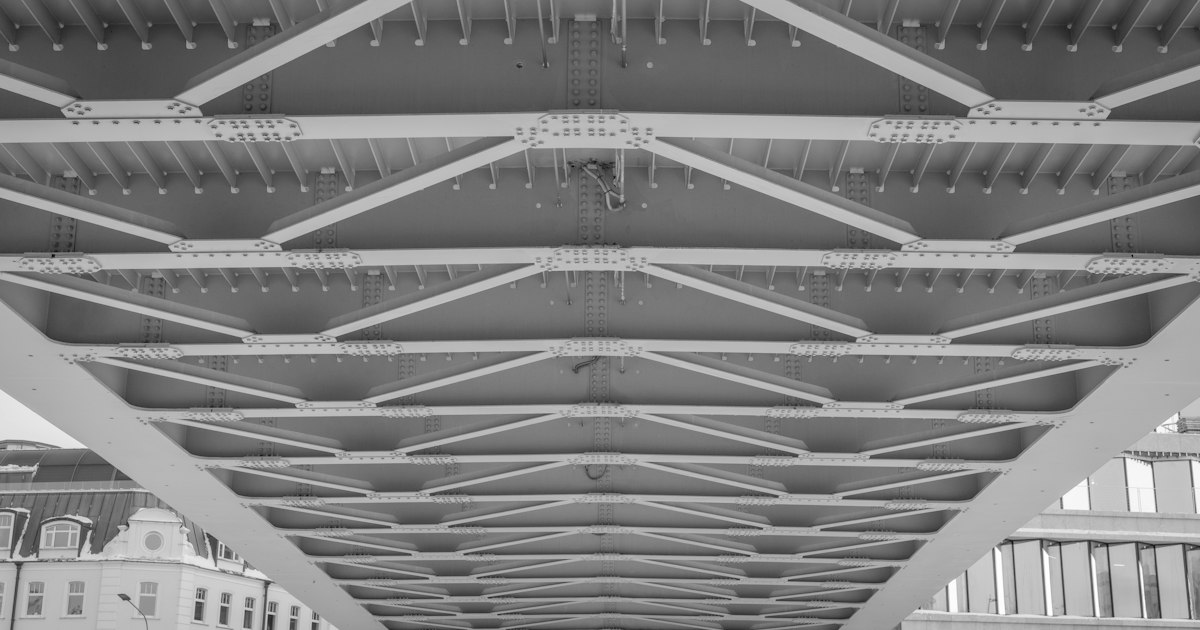
The most important rolled profiles in structural steel construction are I and H profiles standardized according to EN 10025. HEA (light wide-flange beams), HEB (normal wide-flange beams) and IPE (European I-beams) differ in flange width, web thickness and thus in cross-sectional values and field of application.
| Profile Type | Example Dimension | Weight [kg/m] | Iy [cm⁴] | Wy [cm³] | Main Application |
|---|---|---|---|---|---|
| HEA 200 | h=190 mm, b=200 mm, s=6.5 mm, t=10 mm | 42.3 | 3692 | 389 | Lightweight construction, columns under light load |
| HEB 200 | h=200 mm, b=200 mm, s=9 mm, t=15 mm | 61.3 | 5696 | 569 | Standard columns, beams of medium span |
| IPE 200 | h=200 mm, b=100 mm, s=5.6 mm, t=8.5 mm | 22.4 | 1943 | 194 | Ceiling beams, purlins |
| HEB 300 | h=300 mm, b=300 mm, s=11 mm, t=19 mm | 117 | 25170 | 1678 | Main beams, hall construction |
| IPE 360 | h=360 mm, b=170 mm, s=8 mm, t=12.7 mm | 57.1 | 16270 | 904 | Beams of medium to large span |
The most important rolling mills in the DACH region are ArcelorMittal (plants in Differdingen, Luxembourg and Ghent), Voestalpine (Donawitz, Austria) and Salzgitter (Peine, Germany). ArcelorMittal is the market leader with an annual capacity of over 2 million tons of rolled profiles for Europe. Voestalpine produces approximately 450,000 tons of profile steel at the Donawitz location, while Salzgitter manufactures around 600,000 tons through Peiner Träger GmbH.
Standard grade is S235JR according to EN 10025-2 (yield strength 235 N/mm², impact energy 27 J at 20 °C); for welded structures, S355J2 according to EN 10025-2 (355 N/mm², 27 J at -20 °C) is preferred. Hot-dip galvanized profiles according to EN ISO 1461 require steels with silicon content below 0.03% or above 0.14% to avoid the Sandelin effect zone. ArcelorMittal offers the grade S235JRG2 (formerly St 37-2) for this purpose.
Delivery times for standard profiles (HEB 160–300, IPE 200–400) in 2026 are 6–8 weeks from order, special dimensions 10–14 weeks. The price for S355J2 HEB 200 was approximately 820 EUR/t ex works in March 2026, hot-dip galvanized at 1150 EUR/t. Voestalpine sold an 80-percent stake in the HBI plant (Hot Briquetted Iron) in Corpus Christi, Texas to ArcelorMittal in 2024 to raise capital for the conversion of the Linz location to a hybrid electric arc furnace. The first phase of the transformation in Linz is scheduled to be completed in 2027.
Green Steel 2026: SSAB HYBRIT, Salzgitter SALCOS, ArcelorMittal XCarb
Decarbonization of steel production occurs through three main routes: hydrogen direct reduction (H-DRI), electric arc furnace with green power and scrap, and CO₂ capture at the blast furnace (CCS). The most disruptive approach is the H-DRI route, in which iron ore is reduced with green hydrogen instead of coke.
SSAB produced the world's first fossil-free steel on a pilot scale in 2021 with the HYBRIT consortium (SSAB, LKAB, Vattenfall). The technology replaces the blast furnace with a shaft reduction furnace that reduces iron ore pellets at approximately 800–900 °C with hydrogen to iron sponge (DRI). This is melted in an electric arc furnace and alloyed into steel. The process emits only about 0.02–0.05 t CO₂/t of steel instead of 1.85 t CO₂/t, with these residual emissions coming from limestone addition and electricity mix.
In 2026, SSAB is commercially supplying SSAB Fossil-free™ steel to early adopters. A letter of intent with Rheinmetall was signed in January 2026, with additional customers including Volvo Construction Equipment and Mercedes-Benz. Current production capacity in Oxelösund (Sweden) is approximately 1.3 million tons per year, with expansion to 2.5 million tons planned for 2028. In the United States, SSAB has announced a 1-billion-dollar project with Cleveland-Cliffs that is to produce fossil-free steel for the North American market from 2028 onward.
HYBRIT tested a large-scale hydrogen storage facility in Luleå, Sweden, which will remain in operation through 2026. Storage occurs in lined caverns at approximately 100–250 bar to balance seasonal fluctuations in wind power production. The technology could reduce CO₂ emissions in Sweden by 10 percent and in Finland by 7 percent.
Salzgitter is pursuing a similar approach with SALCOS (Salzgitter Low CO₂ Steelmaking). The first stage — a 150,000-ton direct reduction reactor — went into operation in 2024; a second stage with 400,000 tons is planned for 2026. Salzgitter initially uses natural gas, with a gradual transition to hydrogen to be completed by 2033. The price for SALCOS steel is currently approximately 900–1050 EUR/t (S355J2), compared with 720–780 EUR/t for conventional steel.
ArcelorMittal is bundling its decarbonization activities under the XCarb brand. A DRI pilot plant with 100,000 tons annual capacity has been operating in Hamburg since 2023, powered with 60 percent hydrogen and 40 percent natural gas. The Ghent location is to receive a 2.3-million-ton DRI plant from 2028 onwards that operates fully on an H₂ basis. ArcelorMittal has also taken majority ownership of the HBI plant in Texas from Voestalpine to secure iron sponge for European electric arc furnaces.
Steel Construction Welding Processes and Shop Fabrication according to EN 1090
Welding processing of construction steel is carried out according to EN 1090-2, which defines requirements for execution classes (EXC1 to EXC4), welding supervision and quality assurance. The most important welding processes are MAG (135), arc welding (111) and UP (121) for thick-walled cross-sections.
MAG welding with solid wire G 42 4 M G3Si1 (1.0–1.2 mm diameter) and mixed gas M21 (18% CO₂, remainder argon) according to ISO 14175 is the standard process for S235 and S355. Deposition rate is 1.5–3 kg/h; typical parameters for an 8-mm fillet weld are 240–280 A, 26–30 V at 35–45 cm/min welding speed. Heat input should not exceed 1.0–1.5 kJ/mm to avoid embrittlement of the heat-affected zone (HAZ).
Arc welding with basic electrodes (e.g. E 42 5 B 42 H5) is used for site welding and root passes. Electrodes must be dried at 300–350 °C to maintain diffusible hydrogen below 5 ml/100 g deposited metal (HD range). Preheating to 100–150 °C is required for wall thicknesses over 30 mm and S355.
UP welding (submerged arc) is used in shop fabrication for I-beam production (profiles welded from plates). Wire electrodes of 3.2–4.0 mm diameter and basic flux enable deposition rates up to 15 kg/h. ArcelorMittal and Voestalpine use UP for welded special profiles with heights up to 2000 mm.
Shop fabrication according to EN 1090-2 execution class EXC3 (high-rise construction, structures up to 30 m height) requires certified welding supervisors (IWE/IWT according to ISO 14731), WPS (Welding Procedure Specification) for all welded joints and initial testing of each WPS via WPQR (Welding Procedure Qualification Record). Inspection scope: 10 percent visual inspection (VT), 5 percent magnetic particle inspection (MT) for ferromagnetic materials, 2 percent ultrasonic inspection (UT) for butt welds over 8 mm thickness.
For green steel, welding parameters do not change significantly since chemical composition (C ≤ 0.20%, Mn 1.0–1.5%, Si ≤ 0.50%) and thus carbon equivalent Ceq remain identical. SSAB specifies the same WPS parameters for HYBRIT steel as for conventional S355J2.
Stainless Steel and Aluminum Profiles in Facades
Stainless steel and aluminum are used in construction primarily for facades, railings and components exposed to corrosion. Stainless steel according to EN 10088 (1.4301/X5CrNi18-10, 1.4404/X2CrNiMo17-12-2) offers high corrosion resistance and requires no maintenance.
| Material | Density [kg/dm³] | E-Modulus [N/mm²] | Yield Strength [N/mm²] | Thermal Conductivity [W/mK] | GWP [kg CO₂-eq/kg] |
|---|---|---|---|---|---|
| 1.4301 (V2A) | 7.9 | 200,000 | 210–240 | 15 | 4.2–5.8 |
| 1.4404 (V4A) | 8.0 | 200,000 | 220–250 | 15 | 4.5–6.1 |
| S355J2 (Construction Steel) | 7.85 | 210,000 | 355 | 50 | 1.85 (conventional) / 0.05 (green) |
| AlMgSi1 (6082-T6) | 2.7 | 70,000 | 260 | 180 | 8.5–12.0 (Primary) / 0.6–0.9 (Secondary) |
Stainless steel 1.4301 is used for facade structures, railings according to DIN 18008 and fastening elements. Corrosion resistance in atmosphere C3 (city, moderate industry) according to ISO 12944 is permanently guaranteed without coating. 1.4404 with 2–3 percent molybdenum offers additional resistance to chlorides and is used in coastal areas (C4, C5) or under salt stress. The price for 1.4301 sheet (2 mm) was approximately 4800–5200 EUR/t in March 2026; 1.4404 was 5400–5900 EUR/t.
Aluminum facade profiles from AlMgSi1 (EN AW-6082) are supplied in the extruded state, usually anodized (E6/EV1 according to EN 12373, 20 μm layer thickness) or powder-coated (60–100 μm according to Qualicoat). The thermal conductivity of 180 W/mK (versus 50 W/mK for steel) requires thermally separated profile systems for windows and facades to achieve Uf values below 1.3 W/m²K. Manufacturers such as Schüco, Reynaers and Wicona offer systems with polyamide webs (λ = 0.25 W/mK) that ensure separation of the inner and outer shells.
The CO₂ balance of primary aluminum (8.5–12.0 kg CO₂-eq/kg) is significantly higher than that of steel, but the recycling rate exceeds 95 percent, and secondary aluminum has only 0.6–0.9 kg CO₂-eq/kg. The share of secondary aluminum in facade profiles in the DACH region is approximately 60–70 percent. Since 2021, Hydro has offered Hydro REDUXA, primary aluminum with a GWP of less than 4.0 kg CO₂-eq/kg through electrolysis using Norwegian hydropower.
Cost Reality of Green Steel: Surcharge, Availability, Delivery Times
The surcharge for green steel in 2026 is between 150 and 300 EUR per ton, which at a base price of 650–750 EUR/t for conventional S355J2 corresponds to an increase of 20–40 percent. Pricing is project-specific and depends on purchase volume, delivery date and grade.
SSAB communicates a surcharge of approximately 25 percent for SSAB Fossil-free™ compared with conventional steel for purchase volumes over 500 tons. Smaller batches (under 100 tons) are currently not available as production is prioritized for early adopters (OEM industry, large projects). Salzgitter SALCOS is in a similar range with 180–250 EUR/t surcharge; ArcelorMittal XCarb is priced on a case-by-case basis.
Availability in 2026 is severely limited. SSAB produces approximately 1.3 million tons of fossil-free steel, of which about 40 percent (520,000 tons) is available to the market — the remainder goes to internal further processing (SSAB Special Steels). Salzgitter SALCOS supplies approximately 150,000 tons in 2026; ArcelorMittal XCarb approximately 80,000 tons from the Hamburg pilot plant. By comparison: the DACH construction steel market consumes 8.7 million tons annually.
Delivery time for green steel is 14–20 weeks from order; conventional steel is delivered in 6–8 weeks. For construction projects with ESG reporting obligations (e.g., EU taxonomy-compliant projects), early reservation is required. Some developers secure fixed quotas for 2026–2027 through framework agreements.
A calculation example: An office building with 4,500 m² of useful floor area requires approximately 45 tons of reinforcing steel and 28 tons of steel profiles (total steel weight approximately 73 tons). Conventional steel costs (average) 720 EUR/t × 73 t = 52,560 EUR. Green steel costs (average) 920 EUR/t × 73 t = 67,160 EUR. Surcharge: 14,600 EUR or 3.24 EUR/m² useful floor area. At the same time, CO₂ emissions are reduced from 135 tons (73 t × 1.85 t CO₂/t) to 3.7 tons (73 t × 0.05 t CO₂/t) — a reduction of 131.3 tons of CO₂.
For EU taxonomy compliance according to Delegated Regulation (EU) 2021/2139, a threshold of 0.5